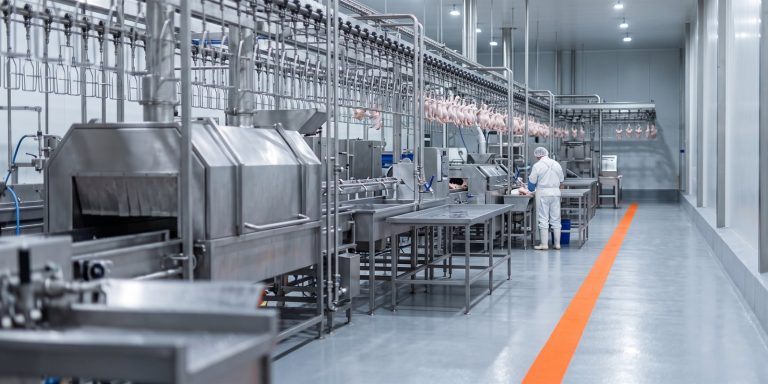
The pneumatic conveyor is a device used in poultry slaughtering and processing plants for the enclosed transport of bulk and moist by-products. As defined by the terminology standard for livestock and poultry slaughtering equipment, it refers to a conveyor that conveys materials through a pipeline by means of gas with a certain energy. In poultry processing operations, this equipment is primarily responsible for pipeline-based transfer of chicken intestines, heads, feathers, and viscera waste, serving as an important piece of equipment for hygienic logistics and by-product collection, characterized by enclosed piping, flexible routing, and the absence of mechanical traction components.
Structural Composition and Working Principle
A pneumatic conveyor consists of an air source (Roots blower or vacuum pump), conveying pipeline, feeding device (rotary valve or suction pickup), separation device (cyclone separator or filter), and control system. By working principle, it is classified into positive pressure conveying and negative pressure (vacuum) conveying. Positive pressure conveying uses a blower at the pipeline inlet to generate compressed air that pushes material fed by the feeding device to the discharge point. Negative pressure conveying uses a vacuum pump at the pipeline end to create negative pressure, drawing material from multiple collection points and transporting it to a separator. In poultry slaughterhouses, negative pressure conveying is more common because it can draw material from multiple dispersed workstations simultaneously and prevents dust leakage from the pipeline. Piping is typically made of 304 or 316 stainless steel with smooth interior walls to reduce material adhesion, and separators are equipped with removable filter elements or cyclone structures for air-material separation.
Typical Applications in Poultry Slaughtering
In poultry slaughtering operations, pneumatic conveyors primarily serve the collection and transfer of by-products and waste: the viscera processing area, for conveying inedible viscera such as chicken intestines and heads separated during evisceration, drawn from workstation collection points and transported to centralized temporary storage or downstream processing equipment; the defeathering section, for collecting wet feathers discharged from defeathering machines and conveying them through pipelines to feather dewatering or temporary storage units; and the cutting and trimming section, for enclosed transfer of trim waste and offcuts. Compared with screw or scraper conveyors, pneumatic conveyor piping can be routed overhead or along walls, freeing up floor operating space, and collection points can be positioned flexibly, facilitating the addition of suction inlets to existing lines. The fully enclosed conveying path also helps control odor dispersion and cross-contamination risks.
Selection and Hygienic Design Considerations
When procuring a pneumatic conveyor, confirm that piping, separators, and material-contact components are made of food-grade stainless steel, with quick-release clamp connections for periodic inspection and cleaning. For negative pressure systems, air volume and vacuum level must be calculated based on the number of simultaneously operating suction points and conveying distance. Air supply pressure requirements for typical poultry intestine conveying equipment in slaughterhouses generally fall within the 0.4–0.6 MPa range. For pipelines conveying edible by-products (such as recoverable viscera), CIP cleaning interfaces or provisions for sanitizer circulation are recommended to meet hygiene management requirements. Equipment should comply with the general safety and hygiene requirements for conveying equipment specified in GB/T 42121-2022 Livestock and poultry slaughtering and processing equipment—Conveyor equipment for poultry slaughtering and processing. Routine maintenance should focus on checking blower operating condition, cleaning separator filter elements or cyclone barrels, confirming pipeline sealing integrity, and removing residue from suction inlet grilles, with flushing and sanitizing of piping and collection containers performed after each shift
Solutions related to this article
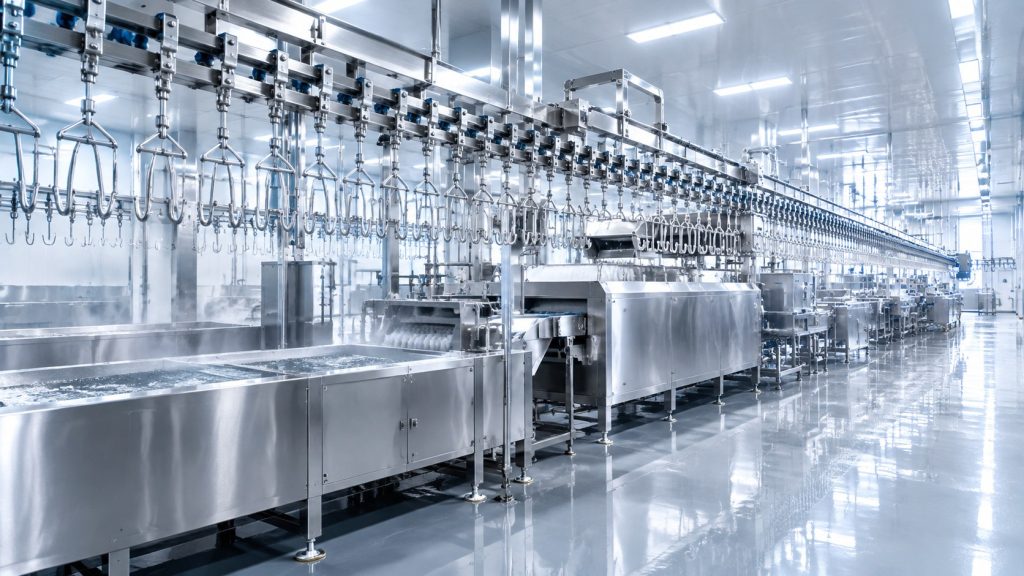 PoultryComplete Poultry Slaughter Line SolutionsHanging, scalding, plucking, evisceration and chilling on one continuous line.View solution →
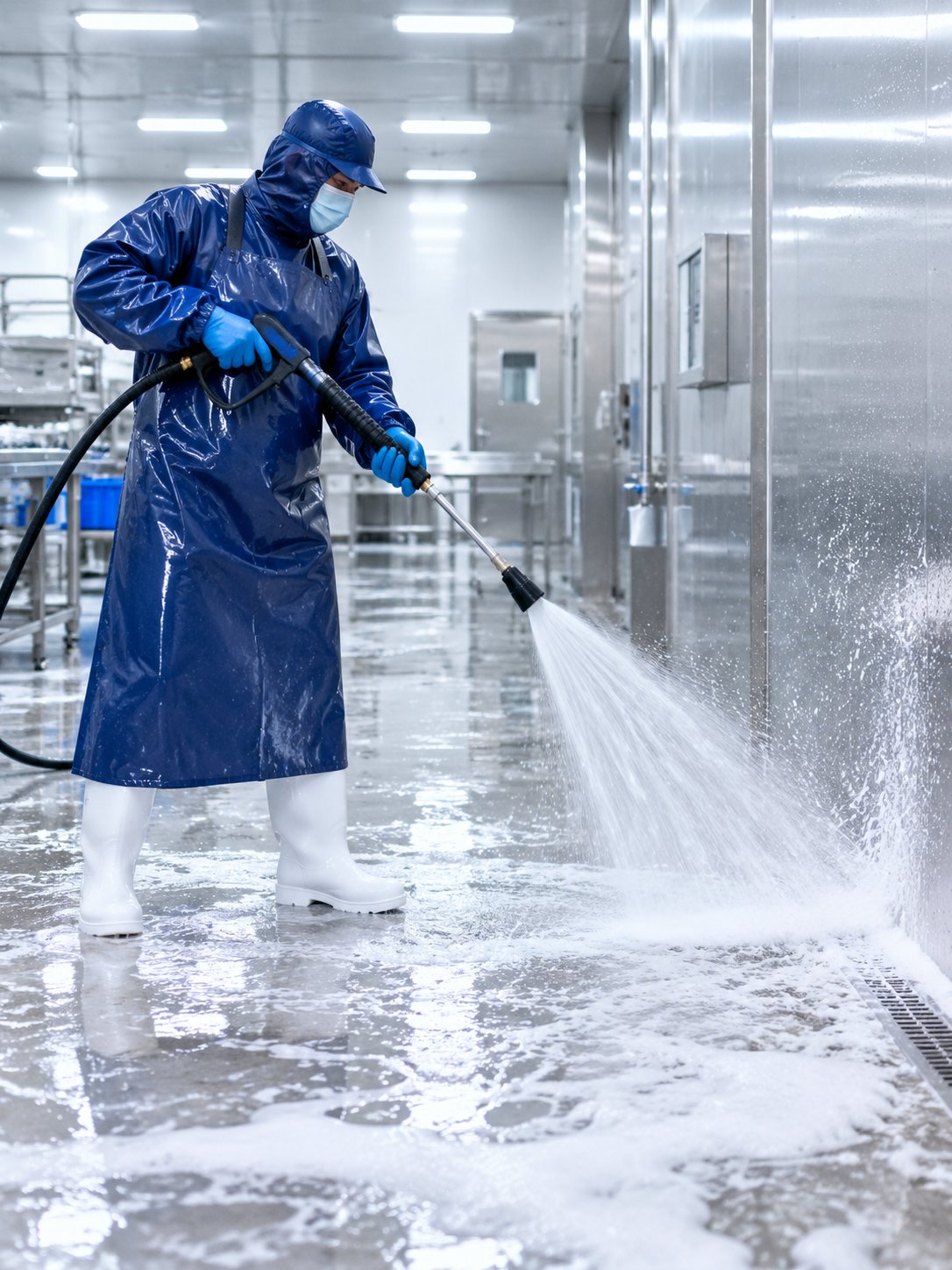 CleaningFood Industry Cleaning Equipment SolutionsFoam, CIP and washdown systems for food-contact surfaces and drains.View solution →
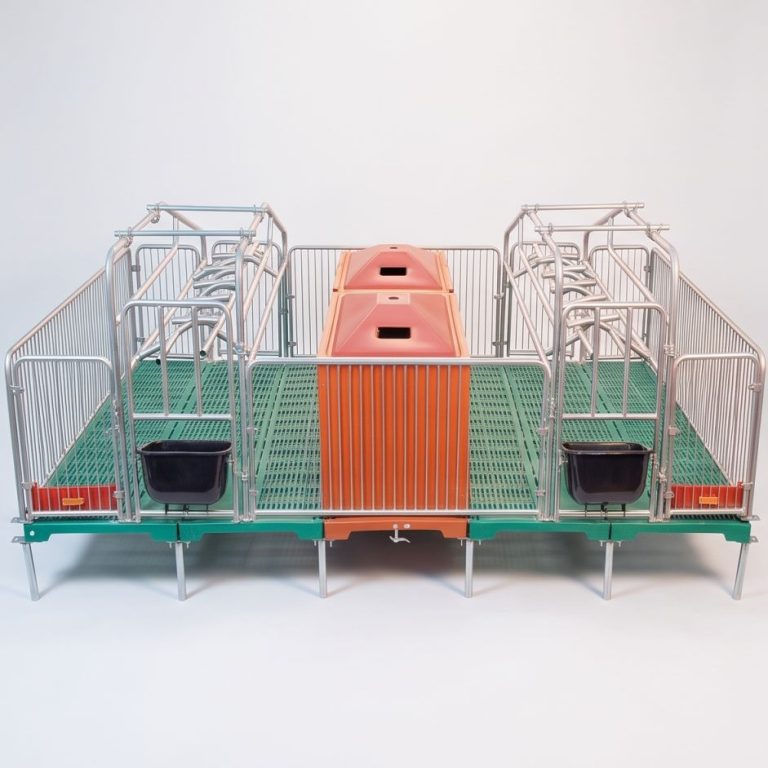 LivestockLivestock Farming Equipment SolutionsHousing, slatted flooring, feeding, drinking and ventilation for pig and cattle barns.View solution →
Products related to this article
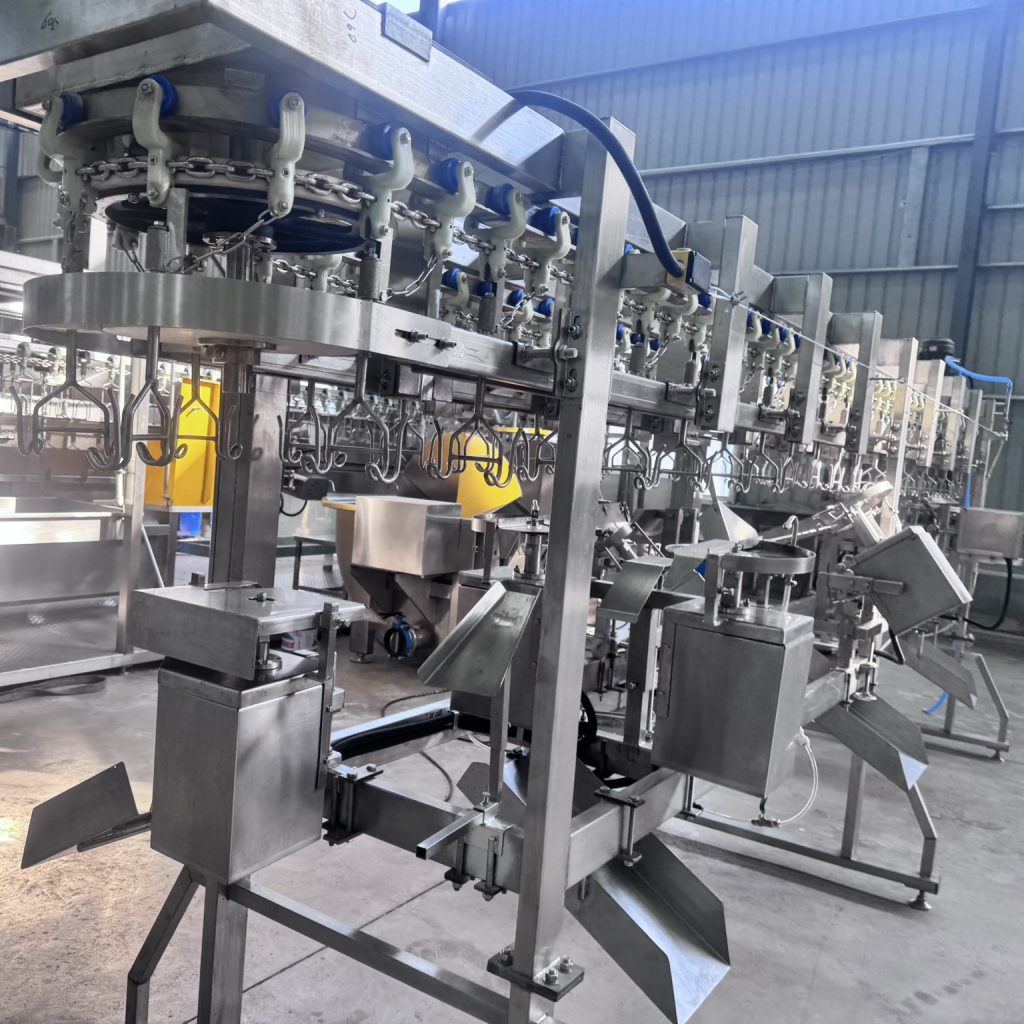 COMPACT POULTRY SLAUGHTER LINE
9-Piece Automatic Chicken Cutting System
Automatically and precisely cuts whole broiler chickens into 2 legs, 2 wings, 2 breasts (with ribs), 2 thigh quarters, and 1 chicken frame. It…
View product →
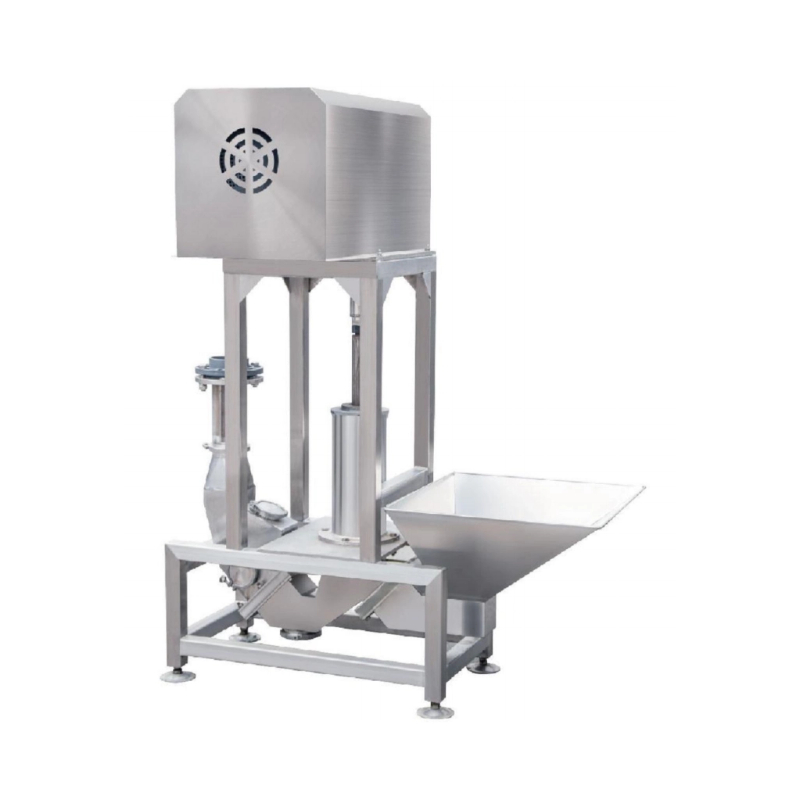 POULTRY SLAUGHTER EQUIPMENT
Pumping and Conveying Pump
This equipment is utilized in the poultry slaughtering production process for the long-distance transportation of various products, including chicken…
View product →
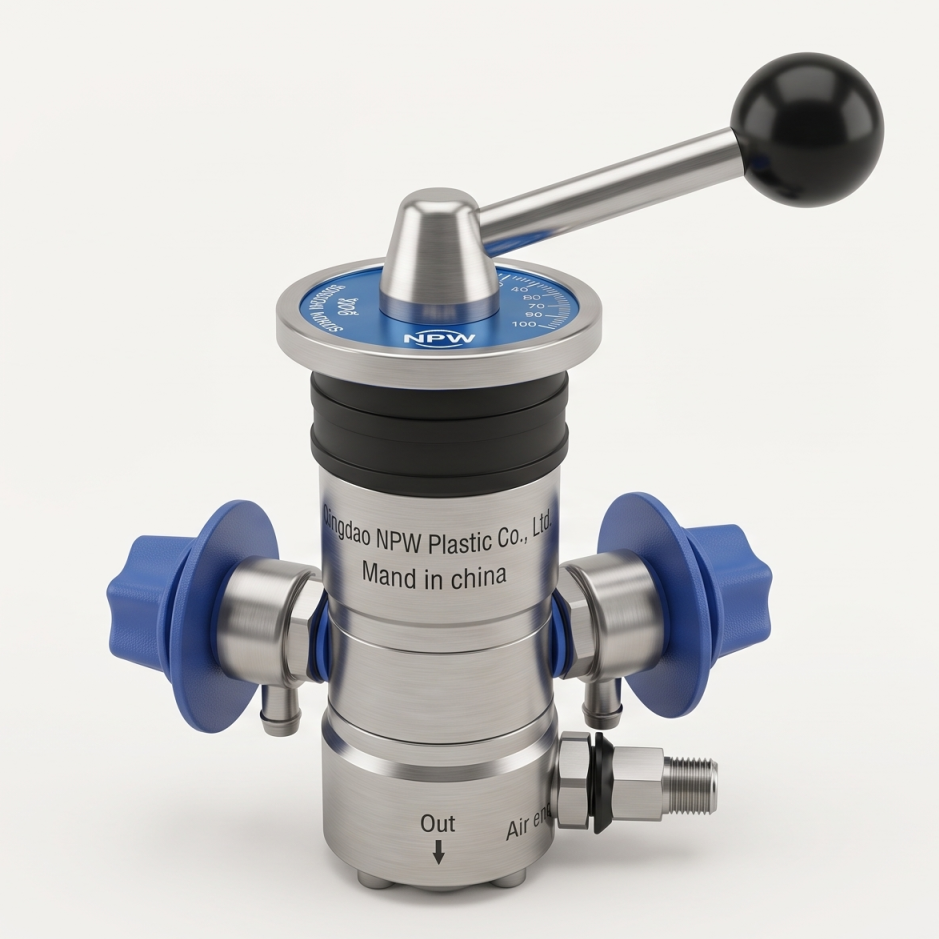 FOAM & SIPHON SYSTEMS
SIPHON INJECTOR (BLUE METERING VALVE MODEL) (7002)
Features an adjustable metering valve, allowing precise control of suction concentration to meet different chemical dosing needs, providing flexible…
View product →
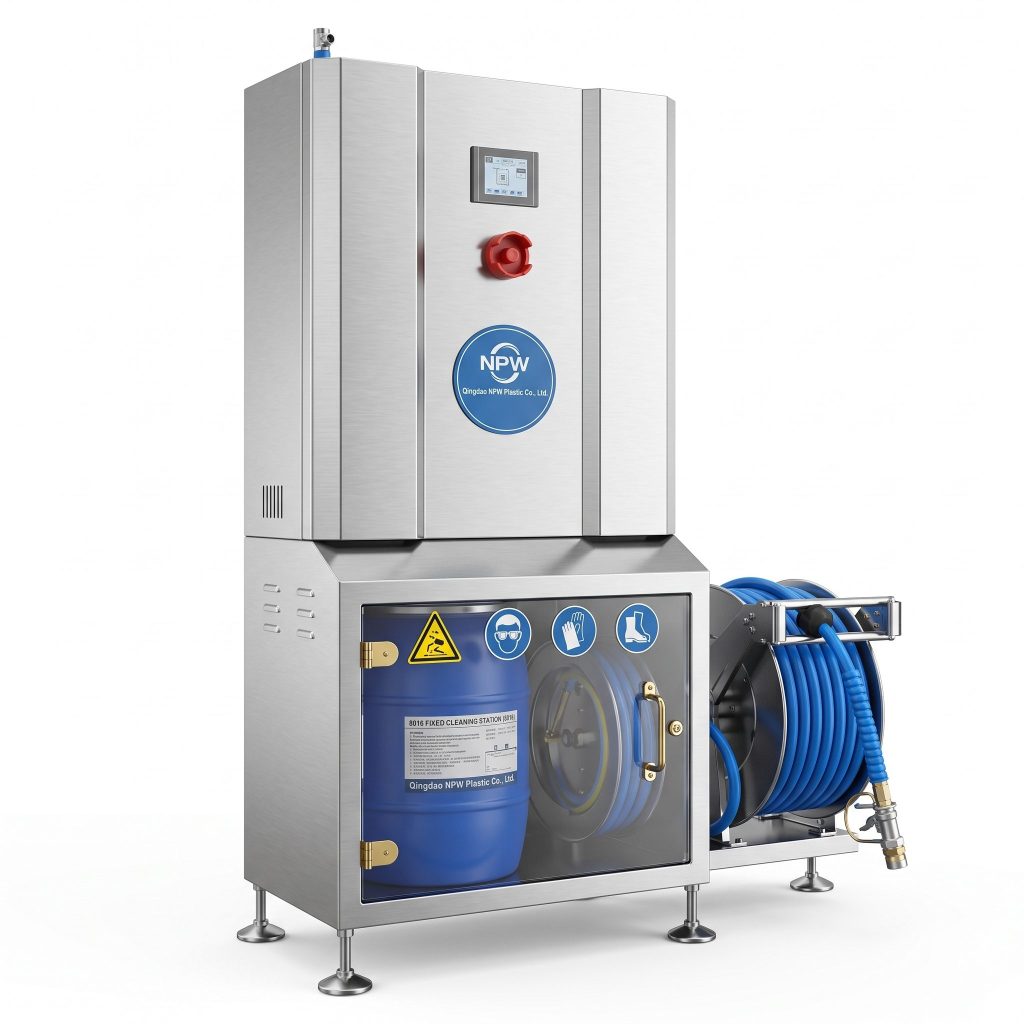 FOOD INDUSTRY CLEANING SYSTEM
8016 FIXED CLEANING STATION (8016)
Fixed installation, integrates into line for continuous cleaning. Stable pressure/flow ensures efficient cleaning. Industrial stainless steel for…
View product →
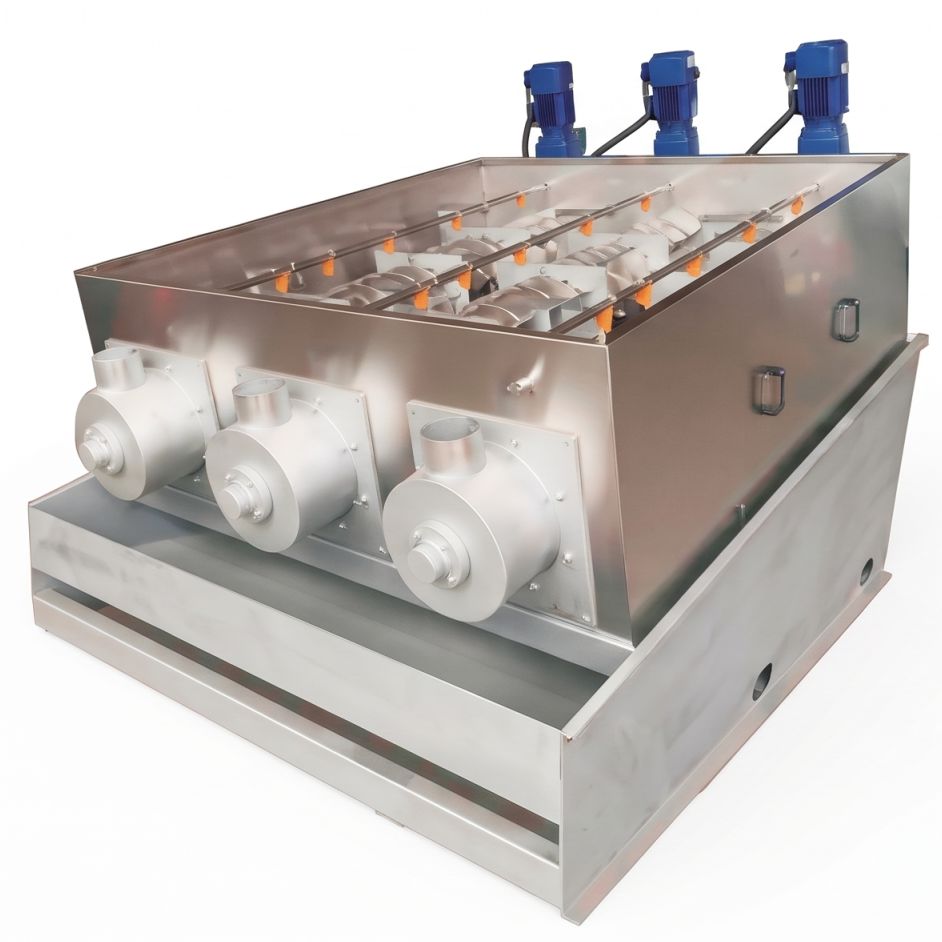 LIVESTOCK & POULTRY FARMING EQUIPMENT
NPW MULTI-DISK SCREW PRESS SLUDGE DEWATERING MACHINE (CZY-131 ~ CZY-404)
Automated, non-clogging multi-disk screw press for continuous 24/7 thickening and dewatering of oily organic sludge with ultra-low energy use.
View product →
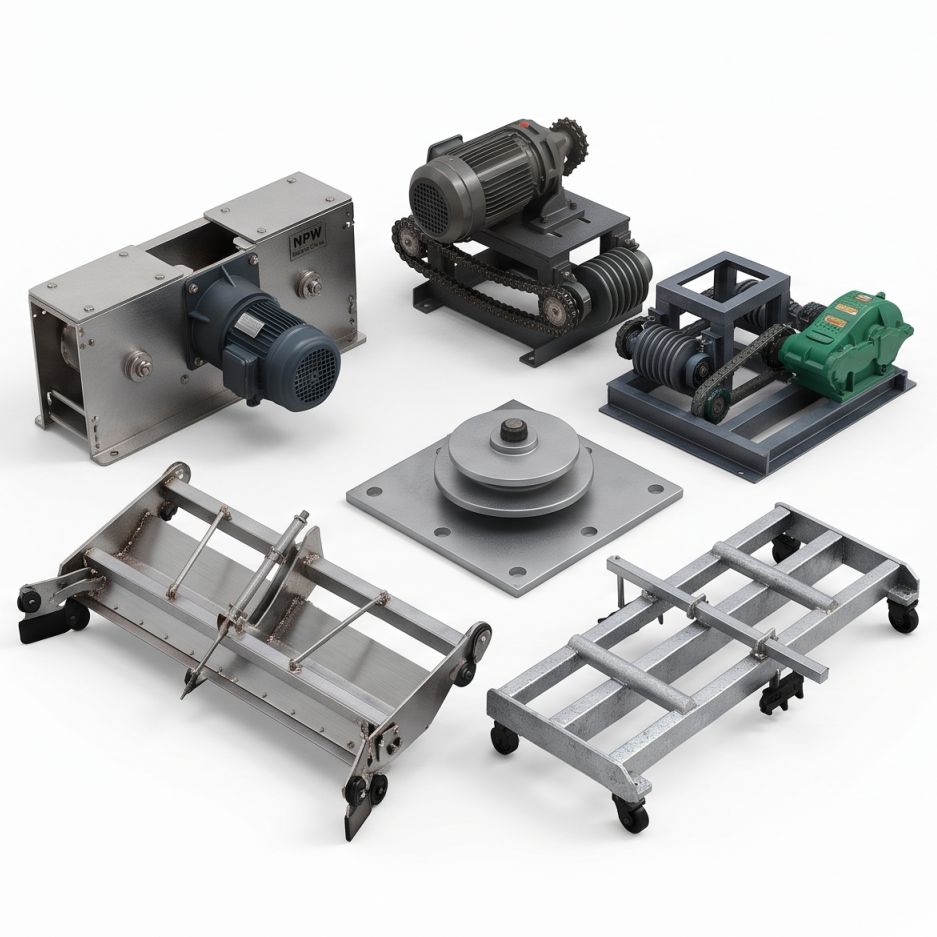 LIVESTOCK & POULTRY FARMING EQUIPMENT
NPW AUTOMATIC V-SCRAPER MANURE REMOVAL SYSTEM (NPW-MRS SERIES)
Heavy-duty automatic manure scraper system with stainless steel folding blades and low-maintenance drive motors for continuous barn hygiene.
View product →